
What Is Male Menopause?
Male menopause is a non-medical term often used to describe hormone changes that occur with age in men. These changes happen gradually and vary from person to person.
Some medical terms that may be used loosely for male menopause are late-onset hypogonadism, andropause and androgen deficiency in the ageing male (ADAM).
Studies report that men start losing around 1% testosterone per year from midlife onward (the rate can vary among individuals).
For some men, this gradual testosterone reduction can produce troublesome physical, sexual and mental symptoms that impact their quality of life.
Do Men Actually Go Through Male Menopause?
The answer is both yes and no.
Yes, some men do experience hormonal changes as they get older. But no, these changes are not the same as those seen in women.
Men don’t go through menopause in the same way women do. The term male menopause is not a medical diagnosis. It is just a way people describe the gradual drop in testosterone that happens with age. This is very different from female menopause, which involves a sudden, permanent change in hormone levels.
The term male menopause was derived from female menopause because both involve age-related hormonal changes that can lead to somewhat similar symptoms.
What Age Does Male Menopause Start?
There is no fixed age at which male menopause starts. But its associated symptoms most commonly appear in men in their late 40s and early 50s.
How Long Does Male Menopause Last?
Male menopause does not have a fixed duration like female menopause. This is because it’s linked to a gradual and ongoing hormone reduction rather than a sudden dip. Its symptoms develop slowly over time and may vary in severity depending on your overall health, lifestyle, and whether treatment is used.
What Are the Symptoms of Male Menopause?
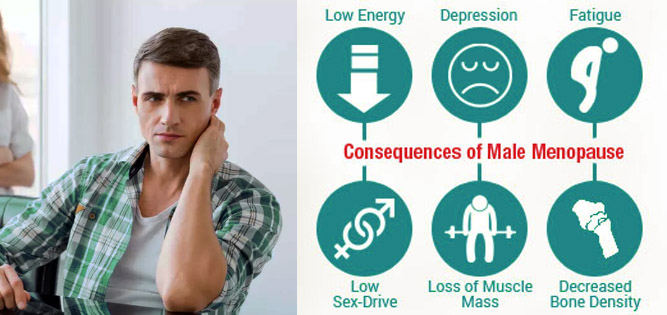
Many male menopause symptoms are age-related. That is why they can be difficult to distinguish from the normal effects of ageing. Some of the common symptoms of male menopause or low testosterone in general include:
- Feeling tired, fatigued or having low energy levels throughout the day
- Emotional symptoms like low mood, lack of motivation and depression
- Mood swings, meaning frequent, sudden changes in your feelings or mood towards something
- Low self-esteem and productivity in general
- Poor focus and difficulty concentrating on tasks
- Brain fog or short-term memory issues
- Sleep issues or insomnia, which further contribute to tiredness
- Increased total body fat, weight gain, especially around the belly and breasts (leading to male boobs development)
- Loss of muscle mass and muscle strength, difficulty gaining muscle, reduced ability to exercise
- Reduced bone mineral density and bone weakness
- Sexual dysfunction, low libido/sexual desire, impaired ejaculation, poor sexual function or sexual health
- Erectile dysfunction
- Infertility
- Height loss (mostly due to low bone mineral density)
- Hot flashes and night sweats
- Reduction in body hair
Many of these symptoms are interconnected, which means one symptom can trigger or aggravate another. In some men, these symptoms get better with time, while others may require medical assistance.
What Causes Male Menopause?
Men can develop male menopause due to a poor lifestyle, low testosterone hormone production, and certain health issues. Some factors that may contribute to this problem include:
- Mid-life crisis
- Anxiety due to relationship or work issues
- Stress
- Drinking too much alcohol
- Smoking
- Lack of sleep
- Poor activity level or sedentary lifestyle
- Lack of exercise
- Certain health problems, such as obesity, type 2 diabetes, heart issues, pituitary gland issues, etc.
Does Vasectomy Cause Male Menopause?
No, vasectomy does not cause male menopause as it has nothing to do with testosterone production or hormonal changes.
A vasectomy simply blocks the tube which carries sperms from the testicles to semen. So, if you have this surgery, you still produce male hormone testosterone, sperms and semen. But your semen does not have sperms any more.
Can Male Menopause be Treated?
Yes, in most cases, male menopause can be treated. Its treatment depends on what’s causing it.
If it is because of your lifestyle, making healthy lifestyle modifications may help manage symptoms. On the other hand, if lifestyle changes are not effective, then doctors may prescribe certain medications.
Diagnosis of Male Menopause
For male menopause diagnosis, healthcare professionals usually do a physical examination, symptom analysis and conduct some blood tests. All these steps are done carefully to accurately find out the actual cause of the symptoms you are experiencing.
Physical Exam
A complete physical examination is done to look for menopause signs, such as breast tenderness or enlargement, body mass index, etc.
Ask About Your Symptoms
Your doctor will record your medical history. They will ask you what sort of mental, physical or psychological symptoms you are experiencing. Try preparing a list of all these symptoms at home so you don’t miss anything important during your consultation.
Blood Tests
Your hormone levels can only be confirmed through blood tests. These inform doctors about your blood’s chemistry.
Testosterone blood test is one of the most important tests done for male menopause diagnosis. It shows your total testosterone and free testosterone levels in the blood, which helps the doctor determine whether your testosterone levels are within the normal range.
Some additional tests that are done to rule out other causes may include:
- Sex hormone binding globulin (SHBG) test
- Prolactin test
- Follicle-stimulating hormone test
- Luteinising hormone test
- Oestradiol or oestrogen levels test
- Thyroid function tests
- Your doctor may conduct the following tests to check your general health:
- Complete blood count (CBC)
- Liver function test (LFT)
- Lipid profile
Treatments for Male Menopause
There are a number of different treatments, both medical and holistic, that can help raise testosterone levels and have you feeling back to normal. These include:
Testosterone Replacement Therapy (TRT)
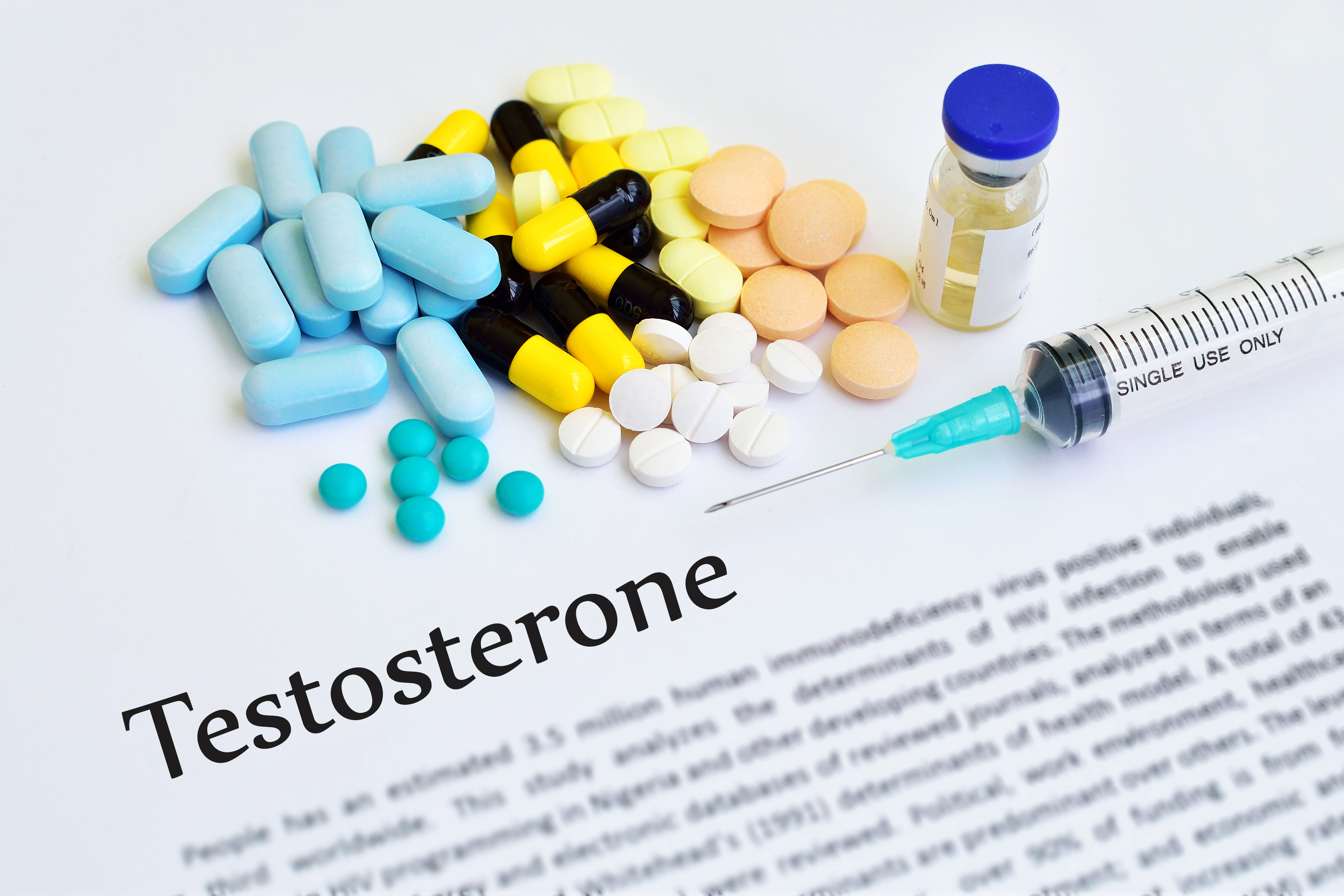
If your testosterone levels are actually low, you have associated symptoms, and you are the right TRT candidate, your doctor may prescribe testosterone treatment.
Testosterone replacement therapy is a hormone treatment used to raise the amount of testosterone in your blood. It can help manage your low T signs and improve your libido, muscle mass, bone density, fat distribution and cognitive function.
TRT has some potential side effects, which is why it’s crucial to discuss its effects with your doctor thoroughly and go for it only if it’s a safe choice for you.
These risks include acne, skin reactions, high red blood cell count, testicular shrinkage, and infertility. This hormone replacement therapy may also increase the risk of prostate cancer and heart disease in some individuals; however, research findings remain mixed.
Lifestyle Modifications
For some men, improving overall health through a healthy lifestyle may also help manage male menopause signs. Losing weight can be effective for overweight men. Similarly, getting quality sleep may also be beneficial, as most of the testosterone is produced during sleep at night.
How to Treat Male Menopause Naturally?
You may be able to tackle your male menopause symptoms through lifestyle changes. Here are the most effective natural ways to improve your hormonal balance and testosterone levels:
Balanced Diet: It’s important to provide your body with all the nutrients it needs to produce hormones and maintain a balance between them.
Exercise: Keep your muscles and body fit by exercising regularly. Research indicates exercise may help raise testosterone levels in men.
Stress Reduction: Being under constant stress for a long period can disturb your hormonal balance, lower testosterone levels and cause other health issues. Managing stress may benefit your physical, mental and hormonal health.
Supplements: Some supplements, such as vitamin D and zinc, may improve your testosterone levels, especially if you are deficient in these nutrients. If you want to take any supplement for low T, make sure you first discuss it with your healthcare provider.
Early Male Menopause
Some men may experience male menopause, or age-related low testosterone, at a younger age than expected. This is generally termed as early male menopause. Its symptoms, diagnosis and treatment are the same as those of the typical age-related form of male menopause.
Difference Between Male Menopause and Female Menopause
Although male menopause and female menopause are quite similar terms, they are very different from each other.
Male menopause is an “unhelpful term sometimes used in the media” (according to the NHS). In contrast, female menopause is a well-defined biological process that marks the end of a woman’s reproductive years.
Only a few elderly men experience male menopause, but 100% of women will go through menopause if they live long enough.
Male menopause involves slow and gradual hormonal changes that occur over many years. But female menopause is a relatively sudden drop in hormones (oestrogen and progesterone).
Men experiencing male menopause don’t actually become infertile but for women, menopause marks the end of their fertility.
FAQs about Male Andropause
Can men get hot flushes?
Yes, men can also get hot flushes for multiple reasons, including low testosterone levels, hormone therapy for prostate cancer, thyroid problems, stress, and more.
Does male menopause cause erectile dysfunction?
Erectile dysfunction (ED) has multiple causes and male menopause is one of them. Studies suggest that many older men develop ED for non-hormonal reasons. About 6% to 45% may have it because of testosterone deficiency.
Does male menopause include hot flushes?
Yes, hot flushes are one of the many symptoms of male menopause.
How common is male menopause?
Male menopause is a rare problem affecting as few as 2.1% of men and it occurs almost only in men aged over 65.
Conclusion
Male menopause is a term people use to describe age-related changes in some men, such as low sex drive, reduced muscle mass, increased tiredness, poor concentration, and enthusiasm or energy difficulty.
It is often linked to low testosterone levels, but experts believe it can also be influenced by lifestyle factors (such as money problems, relationship difficulties, and work-related stress) and psychological problems.
Improving lifestyle and adopting healthy habits may help some men relieve their menopause symptoms.
Testosterone replacement therapy (TRT) may also be a beneficial treatment for men experiencing unpleasant symptoms due to testosterone deficiency. TRT can raise their testosterone concentration in the blood and relieve related signs. But TRT also has some potential side effects, which is why you should discuss the treatment thoroughly with a medical professional before starting it for low T.
Contact our team to learn more about testosterone therapy and find out whether it is the right treatment approach for you.