What is Testosterone?
Testosterone is an essential male hormone produced by the gonads in both men and women. Adrenal glands also secrete it but in smaller amounts. Testosterone is synthesized in the body from cholesterol.
Generally testosterone is recognised as a male sex hormone but it is equally important for overall health in women. However, its levels are lower in women than in men.
Testosterone is involved in various functions in the body, impacting multiple aspects of health, including mental health, mood and sexual development.
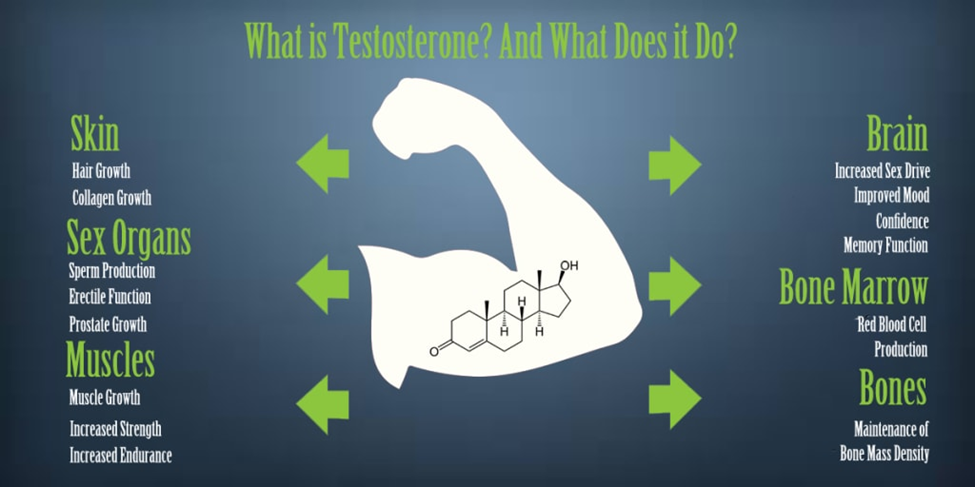
What Does Testosterone Do?
Role of Testosterone in Men
One of the main roles of testosterone is the development of secondary sexual characteristics in men. These are the characteristics that turn boys into men. Examples include deepening of voice, increase in muscle mass, increase in height and body and facial hair growth.
In addition to this, testosterone controls sex drive in men. It is also involved in:
- Maintenance of bone mass density
- Mood and energy stability
- Sperm production
- Erectile function
- Body fat distribution
- Red blood cell formation
Role of Testosterone in Women
Testosterone controls many bodily processes in women, such as:
- Sexual function
- Motivation and mood regulation
- Mental focus
- New blood cell production
- Maintenance of muscle mass and bone density
Regulating Testosterone: Where & How is Testosterone Produced?
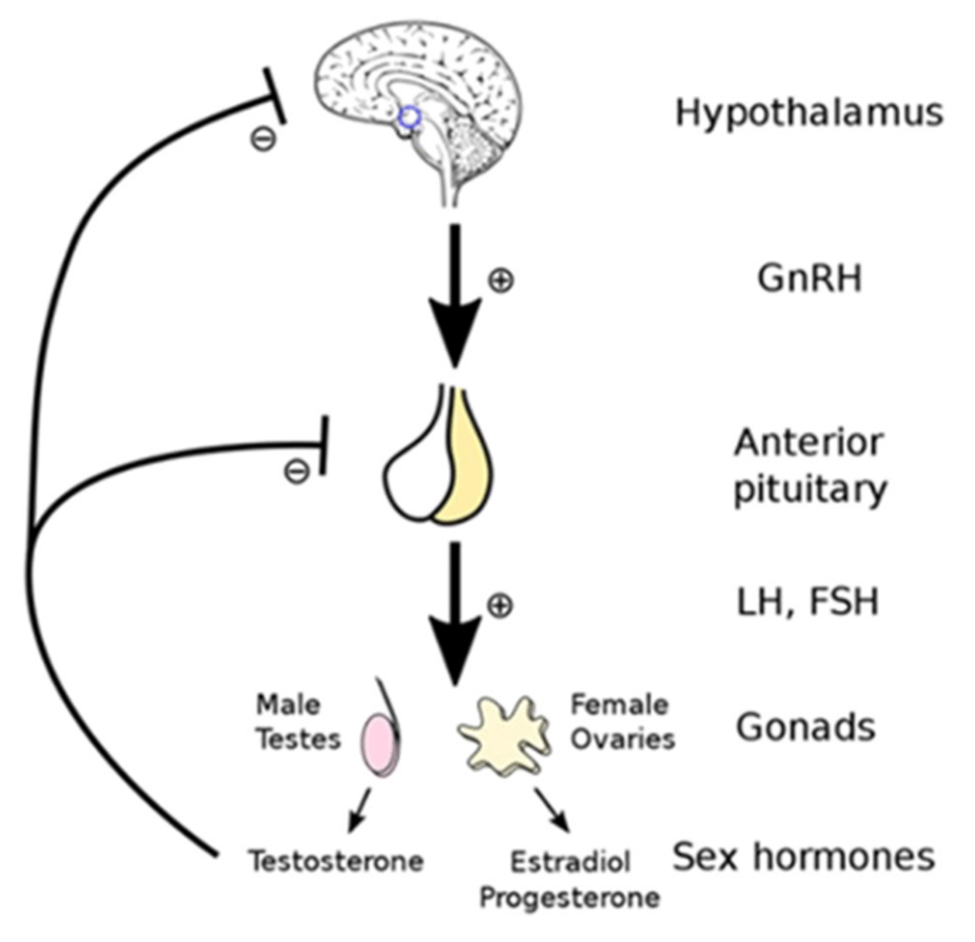
The hypothalamus and pituitary glands are located in the brain. They create the hypothalamic-pituitary-gonadal (HPG) axis, which controls testosterone levels in the bloodstream.
When testosterone levels are low, the hypothalamus dictates to the pituitary gland with the help of gonadotropin-releasing hormone (GnRH). GnRH stimulates the pituitary to secrete luteinizing hormone (LH) and follicle-stimulating hormone (FSH).
LH travels through the bloodstream and orders the testes to produce testosterone. In the blood, 97% to 98% testosterone binds to sex hormone binding proteins (SHBG) while only 2% to 3% exist as free testosterone (which is taken up by cells and used when needed).
The buildup of testosterone concentration in the blood activates a negative feedback system where high T levels signal the brain to suppress testosterone production.
In this way, testosterone levels are optimised in both men and women for overall health.
What is the Average Testosterone Level for Males?
The average testosterone level for a healthy active adult male ranges between 8 and 29 nmol/liter. Low testosterone is considered to be anyone who falls at the low end of this range or is below the low end of this range.
Low Testosterone
Low testosterone is simply what the name says. It is a condition in which your body does not form enough testosterone, leading to testosterone deficiency and associated symptoms.
Symptoms of Low Testosterone
Low Libido
One of the most telltale signs of low testosterone levels is the lowering of sex drive. While a lowered sex drive does naturally occur in men as they age, men who have low testosterone levels will experience a lowered sex drive early on in their lives.
Erectile Dysfunction
Erectile dysfunction is commonly a symptom of a man who has low testosterone levels. Testosterone is not the only factor that goes into the ability to achieve and maintain an erection, but it has a significant impact on it.
Fatigue
If you are tired all the time and can’t bring yourself to go the extra mile to do something physical, there may be low testosterone at work.
Muscle Weakness
Men with low T often experience loss of muscle strength and mass.
Testosterone is responsible for the development of muscle and low T means your body will have a harder time building strength and muscle. In many such cases, even intense weight training has little effect on muscle mass.
With low testosterone, your body will have the opposite effect as the testosterone-induced gain of mass and muscle that occurs in puberty.
Depression
When testosterone levels are low, men can experience symptoms such as bad moods, mood swings, and depression.
Focus and Concentration
Having low testosterone levels can affect many other areas of your life and one of the most common ones is your ability to concentrate, make decisions, and otherwise focus on what you are doing.
Delayed Puberty
Low blood testosterone levels at a young age can result in delayed puberty. Meaning boys don’t develop normal male characteristics on time. They generally have less facial/body hair, tall stature with long legs and arms and gynecomastia (increase in breast tissue size).
What Causes Low Testosterone?
The first step in being able to treat testosterone is understanding what causes it. Here are some of the common causes of low testosterone.
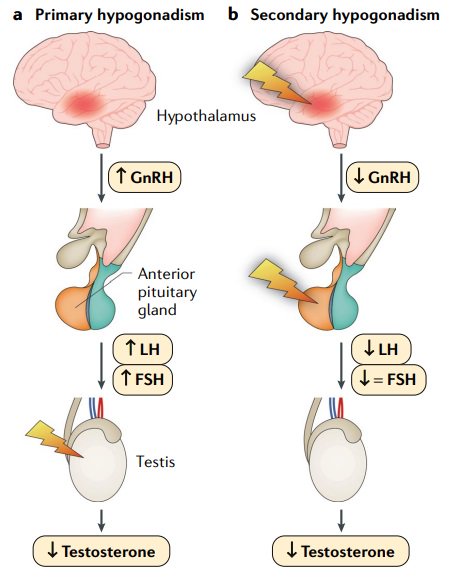
Cause 1: Primary Hypogonadism
Primary hypogonadism means underactive testes that do not produce enough testosterone for what is required to maintain health in men.
Here are some of the most common factors that promote primary hypogonadism, and in turn, low testosterone.
Mumps
Mumps infection can cause inflammation of the testes that can damage testicular cells, leading to low sperm count and reduced testosterone production.
Undescended Testicles
One of the most common factors that contributes to low testosterone is undescended testicles (testicles that have not yet fallen from the abdomen into the right place).
Klinefelter’s Syndrome
In this genetic disorder, men have an extra X chromosome, meaning they have XXY while normal men have XY.
Hemochromatosis or Iron Overload
One of the most common reasons for low testosterone is the condition of having too much iron in your blood, which is known as hemochromatosis. This condition can cause testicular failure as well as pituitary damage.
Cancer Treatment
Chemotherapy and radiation can easily damage your testicles, which commonly results in the lowering of testosterone levels.
Testicle Injuries
Testicular injury due to a direct damage, accident, infection or disrupted blood flow can also cause testosterone deficiency.
Cause 2: Secondary Hypogonadism
This type of hypogonadism is caused by damage that is inflicted upon the pituitary gland or hypothalamus, which are the two glands that impact the levels of testosterone in your body.
Aging
It is a known fact that the testosterone levels of men will lower as they age. Many times, this is completely outside of the control of the individual. Hormones will naturally fade as time goes on.
Obesity
Studies show that individuals with higher body fat percentages have lower testosterone levels. It is primarily because they produce more aromatase enzyme – a chemical that converts testosterone into oestrogen.
Medication
There are a number of medications on the market that are known to lower testosterone levels. Examples include corticosteroids, anti-depressants and anti-fungal drugs.
Inflammatory Diseases
There are a number of diseases that can affect testosterone levels on a more permanent level. These include tuberculosis and other inflammatory diseases.
Pituitary Disorders
We explained above, pituitary gland controls testosterone formation. So, any pituitary disorder or even injury can result in lower testosterone production.
HIV & AIDS
HIV/AIDS damages the hypothalamus and pituitary gland as well as the testicles, which are responsible for testosterone formation.
Kallmann Syndrome
Kallmann syndrome is a genetic disorder in which a person experiences delayed or absent puberty due to impaired brain hormone production.
Obstructive Sleep Apnoea
It is a breathing disorder in which breathing stops and starts on its own while the person is sleeping. If it’s not managed with the right treatment, it can lower your testosterone.
Testosterone Blood Test: Testing For Low Testosterone
If you suspect that you might have low testosterone based on your symptoms, the best thing that you can do is determine testosterone levels via a blood test.
While testing for testosterone might sound scary for those who don’t like medical procedures, the test for low testosterone is a very simple and harmless procedure.
A testosterone blood test is like a simple blood test in which your blood sample is drawn in a syringe and sent to the laboratory for evaluation.
There are finger-prick kits also available, which make a convenient option for people who want to get their testosterone levels tested without leaving home.
Treatment For Low Testosterone
The good thing is low T or male hypogonadism symptoms can be reversed with some natural methods and approved treatments like testosterone replacement therapy.
Various studies prove that natural methods like regular exercise, quality sleep and weight loss (if you are overweight) work well in increasing testosterone levels. But it is only true if poor lifestyle is causing low T.
In case you have low T due to testicular injury or a medical problem, you will likely need TRT to restore normal testosterone levels.
Testosterone Therapy
Testosterone replacement therapy (TRT) is prescribed to hypogonadal men suffering from low T symptoms that are disturbing their lives and health.
It is a hormone therapy in which man-made testosterone is injected into the body to restore testosterone levels.
Testosterone treatment comes in multiple forms (injections, gels, creams, pills, etc.) so people with varying needs can pick what meets their requirements the best.
Generally, testosterone injections and gels are preferred over other options because of their convenience and effectiveness.
TRT is undoubtedly a helpful treatment for men suffering from low T. Studies show it can help improve muscle mass, bone health, cognitive function, body composition and more.
But at the same time, it also has some side effects that you should discuss with your healthcare provider before initiating it. Common TRT side effects include oily skin, bloating due to fluid retention, testicular shrinkage, blood clot formation risk, and low sperm production or infertility.
TRT is often not prescribed to men with prostate cancer and severe uncontrolled sleep apnea.
When Should You See a Doctor about Your Testosterone Levels?
When you think you have the aforementioned low T signs and testosterone deficiency is likely the culprit.
Your doctor will evaluate your medical history and test testosterone levels to confirm whether low T is the actual problem.
If test results and medical evaluation indicate you are testosterone-deficient, the cause of this problem will be diagnosed. After this, you will receive a personalised treatment that will help you boost your testosterone levels and improve overall health.
FAQs about the Testosterone Hormone
How to know if you have low testosterone?
Low testosterone can only be confirmed with a testosterone blood test. It is generally done in the morning with testosterone levels are high. Testosterone levels can vary dramatically over time and even during the course of a day. That’s why this test is often done twice, each conducted on different days.
How can you increase testosterone?
You can increase testosterone with the help of TRT. Your testosterone dosage is decided based on how low your testosterone levels are and how much testosterone you need to reduce low T signs.
How are testosterone levels controlled?
Testosterone levels are controlled by the Hypothalamic-Pituitary-Gonadal (HPG) Axis. Low testosterone levels signal the brain to stimulate the testes to produce more testosterone while high testosterone signals the brain to inhibit further testosterone production.
How to get testosterone therapy?
Testosterone is a prescription medication that you can get either via the NHS or private providers like us. Reach out to our team today to learn more about our TRT plans or to consult with a doctor.
Conclusion
Testosterone affects many areas of the health of a man including their sex drive, mental health, energy, motivation, and even their personal relationships. That is why it is essential to maintain your testosterone within the healthy range.
If you are dealing with low T symptoms, contact us today for a reliable solution. We will help you diagnose the problem and start your TRT journey safely.